Category: Strategy

  • Pay for Success: Overcoming Information Asymmetry

    Pay for Success: Overcoming Information Asymmetry

    June 2, 2014   |  by Rick Jacobus, Director of Strategy and F.B. Heron Foundation Joint Practice Fellow at CoopMetrics

    If you read much of the recent flurry of writing about Pay for Success, you will notice a regular pattern where authors acknowledge that widespread implementation will require “better data” and then quickly change the subject. Surely better data is on the way. We live in an age where it is easy to take this kind of inexorable progress for granted, but given the level of enthusiasm for Pay for Success, it is worth considering what it will realistically cost to get good enough data.

    Certainly the whole potential of Pay for Success rests on data. In order to offer strong financial incentives for success, a government agency must be able to know that their private partner has succeeded. And measuring the “success” of a social program is notoriously hard. We all know it when we see it, but it is not simple to write out a clear and unchanging definition for any given program. A youth employment program cannot simply be judged by the number of youth who get jobs—we need to say something about the quality of those jobs, the level of challenge facing the youth who enter the program, the local economy’s strength, etc.

    This is an example of what economists call information asymmetry. George Akerlof, who won the Nobel Prize for his work on information asymmetry, wrote a paper in 1970 about the market for used cars. Some used cars are in great shape and others are what Dr. Akerlof called “lemons:” they look fine but have been poorly maintained or have other hidden problems. Sellers know which kind of car they have, but buyers cannot immediately tell which is which. Sellers of above-average cars generally have to settle for average price, and buyers have to risk paying average price for a below-average car. A key point is that buyers can partially overcome this asymmetry by investing in information about a potential car; they can hire a mechanic to examine it. But there is also a limit—a simple inspection might weed out the worst cars, but the difference in value between an average and an above-average car may not be enough to justify a more complete inspection.

    Information asymmetry has historically been one reason that we have created nonprofit organizations. Take childcare: A childcare provider knows whether they are providing quality care or not, but it is difficult for parents to tell the difference. It would be very easy for an unscrupulous operator to boost profits by cutting important corners. It is not that they have more incentive to cut corners than someone who makes toothpaste, but because the parents who pay are not the day-to-day users of the service, it is easier to hide the cost-cutting. Organizing a child care center as a not-for-profit organization does not overcome the information asymmetry, but it does accommodate it by reassuring parents that at least the center does not have any incentive to provide low-quality care.

    Like parents, philanthropic donors are not present daily to see whether an organization is doing everything it can to make the most difference. Instead, they have to settle for knowing that the groups to which they give are trying to make a difference and do not have a profit motive to cut corners. The downside of this approach is that donors, like used car buyers, may sometimes have to accept average performance.

    Rather than accommodating information asymmetry, Pay for Success tries to overcome it. This is like pushing water uphill—it can be done, but you have to invest energy to do it. The very idea of Pay for Success requires a significant investment in information. In place of a government agency directly funding a social service agency and accepting average performance, a social impact bond (SIB) requires several layers of intermediaries and generally two levels of professional evaluation: an evaluator who works directly with the program to measure impact and an independent assessor who reviews the data on behalf of the government agency.

    McKinsey & Company developed a proforma to analyze the financial benefits of a hypothetical SIB focused on juvenile justice [1]. They found that even if an SIB-backed intervention produced significant savings for government agencies, the SIB structure was far more costly than directly funding the same services. In their model, a $14.4 million direct investment in preventive services would save the government $14.4 million in corrections costs over a period of about eight years. A successful SIB that funded the same $14.4 million program would incur an additional $5.7 million in research and administrative costs, success fees, and investor profits, and McKinsey & Company estimates that it would therefore take 12 rather than eight years before the public savings justified the increased cost.

    This extra cost sets the bar pretty high for the performance gains that the SIB must deliver. Information technology improvements will continue to make investment to overcome information asymmetry practical in more and more situations, but when the cost of collecting data is taken into account, the social problems that lend themselves to an SIB will be harder to find than they would be if perfect information were free. Once we have found them all, there will still be many important social problems that are worthy of public investment.

    If we want to confront some of our most complex social challenges, we have to come to terms with the reality that a significant level of information asymmetry is a fact of life and we cannot wish it away by calling for better data. For some social problems, sizable investment in information may make it practical to offer financial incentives to the best-performing programs. For the rest, we do not have to give up on using data to drive improved performance, but sometimes it might be more cost-effective to focus on raising the performance of the average program instead of providing financial incentives for above-average performance.


    [1] McKinsey & Company. (2012). From potential to action: Bringing social impact bonds to the US. Retrieved from http://www.rockefellerfoundation.org/news/publications/from-potential-action-bringing-social

  • Shelterforce: Neighborhood Improvement Can Prevent Gentrification

    Shelterforce: Neighborhood Improvement Can Prevent Gentrification

    Alan Mallach’s blog post, “Hung Up on Gentrification? Don’t Be” seems to have struck a familiar nerve.

    Certainly, gentrification is one of the most vexing issues facing community development practitioners. Even where gentrification is only a distant threat (or hope, depending on your perspective) it looms large in any discussion of neighborhood change. And the way most people talk and think about it seems to create a black hole of self-doubt from which no realistic strategy for neighborhood improvement can escape.

    The paralyzing thinking goes like this: We want to improve lower-income neighborhoods to make them better places for the people who live there now but anything we do to make them better places will inevitably make people with more money want to live there and this will inevitably drive up rents and prices and displace the current residents, harming the people we set out to help (or, in many cases, harming the very people responsible for making the neighborhood better through years of hard work) and rewarding people who drop in at the last minute to displace them.

    Once you recognize this dynamic, it is very hard to talk yourself into wholeheartedly backing any kind of action. It seems wrong to leave distressed communities to rot but it also seems wrong to turn them around. Sadly, the most common response is to try to find strategies that improve things, but not too much. We feel okay about working toward improvement as long as we don’t really expect to succeed.

    Luckily, this paradox is built on a total misunderstanding of how neighborhood change actually happens.

    I suspect that what Alan dismisses as “social ownership” may actually be one key to overcoming this misunderstanding.

    People tend to talk as if all neighborhoods fell along a single continuum from worse to better. But, in reality, there is more than one kind of better. My experience has been that residents of low-income communities almost universally want their neighborhoods to be “cleaner” and “safer” and to have more stores even though they generally also recognize that those changes will eventually lead to higher rents. However, they generally really don’t want their neighborhoods to become “fancy”, “flashy”, “hip” or “trendy.”

    While it is common to worry about gentrification whenever rents rise, gentrification seems to happen most dramatically in neighborhoods where rents fall creating an opportunity for speculators to “flip” an area. While it sometimes happens that more moderate- and mixed-income, working-class neighborhoods become “hip”, it is far less common because middle-income families simply outbid the speculators and hipsters that form the leading wedge of gentrification. So for a lower-income community, “improvements” that make the place more attractive to slightly higher-income households may actually provide the most promising defense against gentrification.

    What is so promising about a program like the one Alan proposes, which encourages homebuyers to invest in lower-income neighborhoods along with incremental and sustained investment in things like commercial revitalization, is that these things won’t dramatically change the social character of a neighborhood overnight. And that means that the people who will choose to move in will be more likely to be people who are comfortable with the existing character of the neighborhood.

    This kind of gradual, sustained, and smaller-scale improvement leads to a broader but still contiguous income mix. By contrast, a large-scale investment in luxury lofts might also make the neighborhood more “mixed income” but the bi-polar income mix (high end and low end with no middle) is unsustainable; one group is bound to loose and we all know which one. Luckily the improvements that attract moderate-income working families and the businesses that serve them are very different than the ones that attract upper-income residents.

    Either kind of change will inevitably increase rents beyond some residents’ means. Either kind of change requires the kinds of counterbalancing public investment in preservation of long-term affordable housing that Alan references. But, a gradual influx of moderate-income homebuyers creates displacement at a scale that is closer to the scale of our affordable housing resources, while flipping a neighborhood to high end housing displaces people faster and makes the gap between market prices and what is affordable so great that it is simply ridiculous to discuss “affordable housing” as an appropriate response.

    When we see any kind of improvement as equivalent to gentrification we get stuck. We need a different definition of gentrification. My suggestion is that gentrification is “when your neighborhood becomes someone else’s neighborhood.”  That leaves room for “improvement” to mean “when your neighborhood becomes a better version of your neighborhood.”

  • Brookings: Retail Trade as a Path to Neighborhood Revitalization

    Brookings: Retail Trade as a Path to Neighborhood Revitalization

    Contact About Resources Portfolio Home

    Picture 5.png

    Buy the book on Amazon.com
    Download the chapter: Retail Trade as a Path to Neighborhood Revitalization by Karen Chapple and Rick Jacobus

    Picture 10.png

    A condensed version of the chapter was also produced by UC Berkeley’s Center for Community Innovation.

    From the introduction:
    “Retail trade is a highly visible feature in a community, and is often a symbol of economic status. Terms like “upscale retail,” “strip mall,” or “big box store,” convey very different images of retail trade that are widely associated with economic prosperity, or the lack thereof. But, does retail trade really revitalize run down or neglected neighborhoods? And if so, what are the mechanisms at work, the successful strategies, and necessary conditions that lead to success? In “Retail Trade as a Route to Neighborhood Revitalization,” Karen Chapple and Rick Jacobus tackle these questions. They begin by defining the issues and expectations associated with retail development and neighborhood revitalization. The authors state that, from the perspective of residents, there are three types of neighborhood revitalization: more access to services and opportunities for low-income populations; changes from a low-income neighborhood to a mixed income neighborhood (due either to an influx of newcomers or increases in incomes for local residents); and gentrification that gradually replaces existing low-income residents with more affluent newcomers. Using a conceptual model, Chapple and Jacobus describe the relationship between retail development and neighborhood revitalization.

    Their review of the literature finds mixed evidence for the assumption that low-income neighborhoods are underserved, and limited formal evaluation of the effects of retail development, especially with respect to overall neighborhood improvement. The authors acknowledge the challenges to evaluating retail development programs, such as their small scale, the variety of actors involved, and limited neighborhood level capacity. In reviewing the evidence, Chapple and Jacobus examine three broad strategies to retail revitalization: public-led retail development, private-led retail development, and commercial corridor revitalization. Retail strategies variously target job creation, vacancy rates, private investment, public investment, tax revenues and property values, crime and safety, and community identity. In order to further explore the relationship between these retail development goals and neighborhood revitalization, Chapple and Jacobus provide a case study of the San Francisco Bay Area, analyzing the relationship between retail and neighborhood revitalization from 1990 to 2005 in a region with unusual increases in income inequality accompanied by significant revitalization. They find that the way the retail sector changes is closely related to how the neighborhood changes, with increases in middle income residents (rather than gentrification or other forms of change) most closely associated with retail revitalization.

    The paper concludes with the suggestion that any large-scale impacts of retail development on community economic health occur indirectly, such as through changes in internal and external perceptions of the neighborhood and, ultimately, changes in neighborhood residential composition. But, the authors note that existing studies of the effectiveness of neighborhood retail development strategies have not explored these broader impacts. Chapple and Jacobus also recommend further research to address how outcomes for the poor are tied to the specific character of neighborhood change. Such research might suggest specific retail development strategies that are most likely to benefit the poor and lead to stable mixed-income communities without contributing to displacement of the poor.”

  • League of Cities Mayors Forum

    League of Cities Mayors Forum

    League of California Cities

    Mayors and Council Members Executive Forum
    Monterey Conference Center
    July 26th 2007
    This presentation for approximately 500 Mayors and Council Members from cities and towns throughout California focused on defining the purpose of affordable homeownership and balancing competing goals for local homeownership programs.

  • Grocery Store Attraction Strategies

    Grocery Store Attraction Strategies

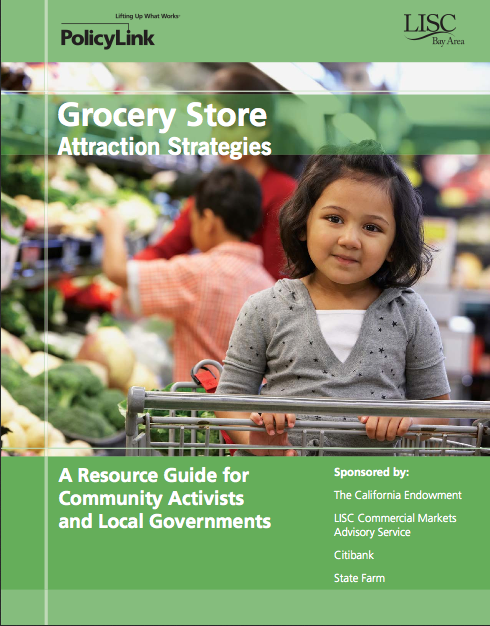
    Grocery Store Attracton StrategiesA Resource Guide for Community Activists and Local Governments

    By Rick Jacobus and Maureen Hickey

    Download PDF File

    This report was commissioned by Bay Area LISC and PolicyLink with sponsorship from the California Endowment, LISC’s Commercial Markets Advisory Service, State Farm Insurance, and CitiBank.  The report provides an overview of the process that community activists have used to attract new fresh food retailers into disinvested urban communities.


  • Commercial Revitalization Planning Guide

    Commercial Revitalization Planning Guide

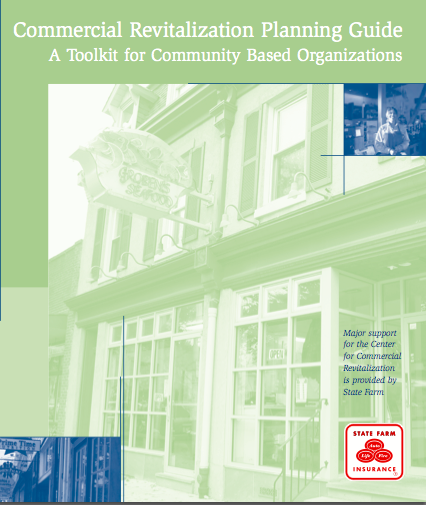
    Commercial District Revitalization Planning Guide
    Commercial District Revitalization Planning Guide

    By: Rick Jacobus and Maureen Hickey

    This hands on guidebook is filled with detailed direction that will provide practitioners with a starting point for organizing comprehensive commercial district revitalization efforts. It takes the reader through each stage of revitalization from planning, research, and visioning to understanding the potential of the community, analyzing the business mix, marketing the assets, and implementing the work plan. The planning guide also provides a set of practical tools to assist in implementation.

    Table of Contents:
    Forward
    Urban Commercial Revitalization Programs
    Planning For Revitalization
    Identifying and Involving Stakeholders
    Developing a Community-Based Vision
    Compiling Building and Business Inventories
    Understanding Market Data
    Using Surveys and Interviews to Collect Local Market Data
    Assessing Crime and Community Safety
    Developing Business Attraction Goals
    Evaluate Streetscape Conditions
    Branding the District Identity
    Defining an Implementation Strategy
    Measuring Impact

    Appendix A: Hiring a Market Analysis Consultant
    Appendix B: Resources
    References
    Acknowledgements
    Download a PDF of the book

  • Joint Venture Guide

    Joint Venture Guide

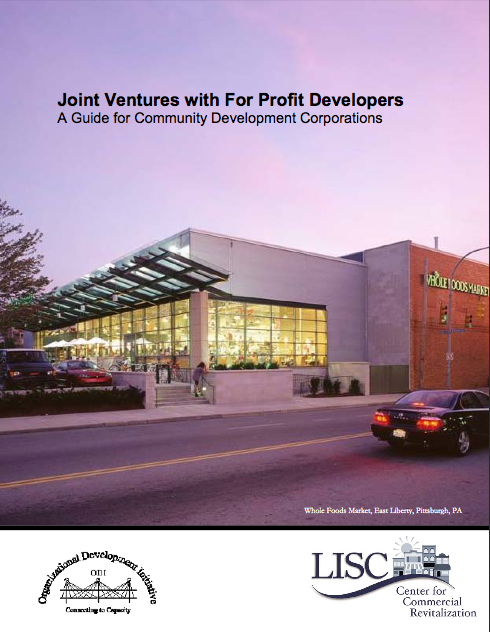
    Joint Ventures GuideJoint Ventures with For-Profit Developers. A Guide for Community Development Corporations

    Written by Greg Maher, Rick Jacobus, Maegan Winning and Judy Turnock.

    This guide is designed to assist CDCs in becoming educated consumers as they think about, plan and become partners in joint ventures with for-profit developers.

    Joint ventures between a community development corporation (“CDC”) and a for-profit partner present tremendous opportunities for a CDC to build its skills and complete projects that are larger in scale and/or beyond its core competencies. However, there are a host of business issues raised by the prospect of a CDC co-owning or working closely with a for-profit on a project. Many issues need to be carefully negotiated for the CDC to protect its financial integrity and credibility. Based on Greg Maher’s 2005 memo, this guide is structured to assist CDCs in becoming educated consumers as they think about, plan and become partners in joint ventures with for-profit developers.

    Download PDF file

  • Multi-Lingual Welfare to Work Collaboration

    Multi-Lingual Welfare to Work Collaboration

    Screen Shot 2014-05-05 at 5.48.48 PM

    CIRCLES Welfare to Work Collaborative

    As Neighborhood Economic Development Director of EBALDC, I coordinated a community planning process focused on the challenge of welfare to work. The process involved all of the 35 social service agencies and immigrant associations serving the neighborhoods in identifying collaborative solutions.

    The planning process led to the formation of the CIRCLES collaborative, through which 12 organizations coordinated a comprehensive set of services ranging from English as a second language classes, work readiness counseling, transportation assistance, work experience job placements and ultimately job referrals. The program model involved several small immigrant service associations as direct case managers and language specialists but built a common infrastructure of relationships with larger institutions such as the local community college, employers and transportation support organizations. Collaboration allowed the smaller organizations to build on their relationships in the ethnic communities while benefiting from the resources and access to jobs that larger institutions could provide. I facilitated collaborative meetings and coordinated the preparation of funding applications that successfully secured over $2.5 million from 9 different sources to support the initial pilot program.

    Download the PDF Document

  • Lower San Antonio Neighborhood Plan

    Lower San Antonio Neighborhood Plan

    LSA Plan

    Oakland’s Lower San Antonio District is a multi-ethnic neighborhood with a population almost evenly divided between African American, Latino and Asian American families. Partly because of this diversity, the neighborhood has lacked the strong organizational leadership that is so present in other Oakland neighborhoods. Historically, the area has received less than its proportional share of public investment and social services.

    The Lower San Antonio Neighborhood plan grew out of a 2 year long community planning process involving over 1000 neighborhood residents. I led a team of planners and community organizers in an outreach process to bring together community leaders, nonprofit organizations, and cultural institutions from the area’s many different ethnic groups. I facilitated neighborhood planning council meetings leading to development of a final plan which outlined the area’s most pressing needs, identified what individuals and organizations were already doing to confront those problems and prioritized a list of new ideas for collaborative solutions to community problems. The plan directly led to the creation of several ongoing new multi-ethnic collaboratives including the Roosevelt Village Center youth collaborative, the EastLake Main Street Program, CIRCLES welfare to work initiative, and a neighborhood arts alliance. The strong cooperation evidenced by the LSA Plan was an important factor in the Annie E. Casey Foundation’s decision to select Lower San Antonio as one of the neighborhoods in their national Making Connections Initiative. The Casey Foundation will invest millions of dollars in the community over a 5 to 10 year period.

    Download PDF Document